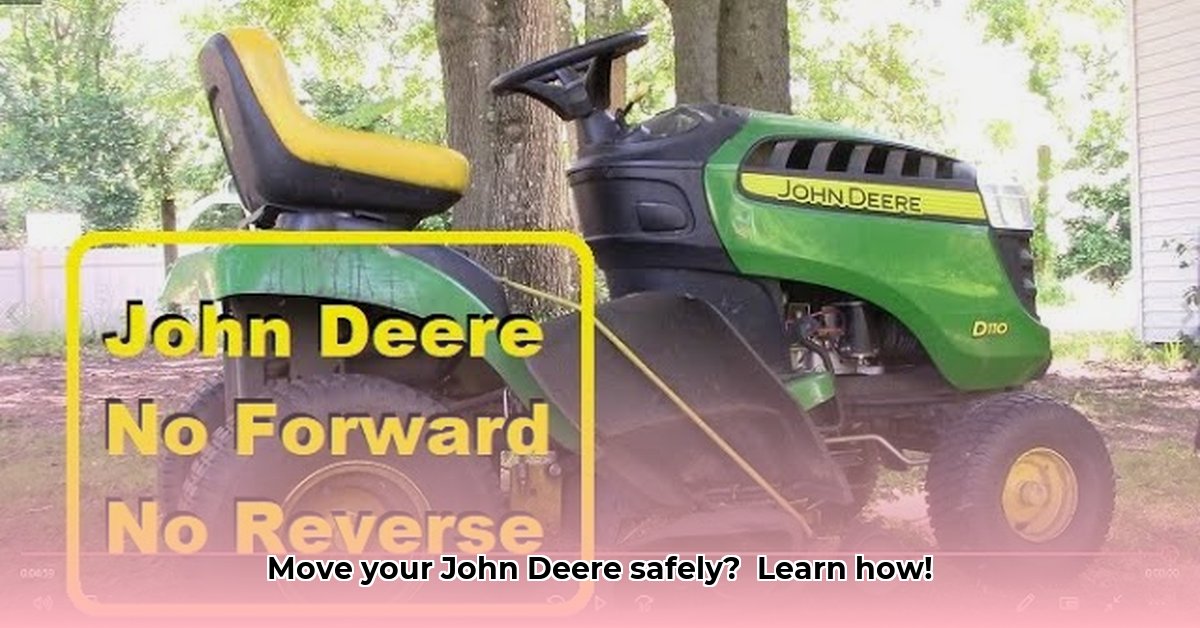
How to Move a John Deere Tractor: A Comprehensive Guide
Moving a John Deere tractor, especially a non-running one, requires careful planning and execution. This guide provides general steps and highlights model-specific considerations. However, always consult your owner's manual for precise instructions relevant to your tractor's model and year. Improper procedures can lead to serious injury or equipment damage. For toy tractors, see this helpful guide.
Safety Precautions: Prioritizing Your Well-being
Before attempting to move any John Deere tractor, carefully review these safety precautions. Failing to do so could result in serious injury.
- Assess the Area: Thoroughly inspect the surrounding area for obstacles, uneven terrain, and potential hazards. Ensure the ground is firm and level to prevent tipping. Is the area adequately ventilated? Are there any overhead power lines?
- Engage the Parking Brake: Always engage the parking brake firmly before attempting any movement. This prevents accidental roll-away.
- Inspect Equipment: Check all towing straps, chains, or other equipment for wear, damage, or fraying. Replace any questionable items immediately. Are your straps rated for the weight of the tractor?
- Wear Protective Gear: This is non-negotiable. Use sturdy work boots, gloves, eye protection, and hearing protection (especially if using a tow vehicle). Don't cut corners on safety.
- Get Help: Never attempt to move a large, non-running tractor alone. Get at least one other person to assist. Proper communication and coordination are crucial.
General Steps: Initial Checks and Procedures
While many steps are model-specific, these general procedures apply to most John Deere tractors:
- Identify the Model: Accurately identify the tractor model and year to locate the appropriate section in this guide and your owner's manual.
- Neutralize the Transmission: Place the tractor's transmission in neutral. This is critical to avoid internal damage. Your owner's manual provides detailed instructions for your specific model and transmission type (manual or hydrostatic). Never attempt to move a tractor without ensuring the transmission is in neutral.
- Choose Your Method: Decide whether to tow or push the tractor based on its size, weight, the terrain, and available equipment. Towing is usually safer and more practical for larger machines.
Model-Specific Instructions: Addressing Individual Tractor Variations
This section will be expanded to include detailed, step-by-step instructions for specific John Deere tractor models. Because variations are significant, consulting your owner's manual is absolutely crucial.
(Note: This section would contain detailed instructions for various models, organized by model number or series. Each section would include diagrams, images, and precisely worded steps based on the operator's manual for that specific model.)
Troubleshooting: Addressing Common Issues
Encountering problems during the moving process is possible. Addressing these issues properly is vital for safety.
- Stuck Levers: Don't force any stuck levers. Apply penetrating lubricant if appropriate (refer to your owner's manual). If it remains stuck, stop and seek assistance.
- Unexpected Resistance: Resistance during movement suggests a mechanical problem. Stop immediately and do not attempt further movement until the issue is resolved. This could indicate a transmission or brake malfunction.
- Tractor Won't Move: Double-check that the parking brake is disengaged (if applicable) and the transmission is in neutral. If problems continue, professional help is necessary.
When to Seek Professional Help: Knowing Your Limits
It's better to be safe than sorry. Call a professional mechanic if:
- You are Unsure About Any Step: If you have any doubts or uncertainties, seek professional help. Your safety is paramount.
- The Tractor is Too Heavy or Difficult to Manage: Attempting to move a tractor beyond your capabilities can lead to serious accidents.
- You Encounter Mechanical Problems: Don't attempt DIY fixes for serious mechanical issues. A professional mechanic has specialized equipment and knowledge to analyze the problem and potentially avoid further damage.
Conclusion: Safe Tractor Movement is Non-Negotiable.
Moving a John Deere tractor safely requires careful planning, attention to detail, and a respect for the potential dangers involved. Remember: this is heavy machinery; accidents can happen. Always consult your owner's manual, prioritize safety precautions, and don't hesitate to call a professional when needed. The safety of yourself and the integrity of your tractor are non-negotiable.